
Are Supplements Making Your Candida Worse?
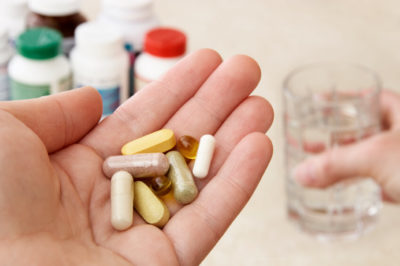
So you’ve started your Candida Diet, stocked up your fridge with lots of non-starchy vegetables and gone to the health food store to buy all the supplements that you need. You’re all ready to go, but there’s one last thing that you need to check. Take a good look at the back of those supplement bottles, because there might be some ingredients listed there that can make your Candida worse.
The trouble is that very few supplements are made specifically for Candida sufferers. So for example a supplement for digestive problems might contain dextrose, which is fine for most people, but it is just another name for the sugar that a Candida sufferer should be avoiding. You need to check that ingredient label very carefully before you buy a supplement.
Before we start, I should make a quick note. It may not be possible to avoid every supplement that contains one or more of these ingredients. In fact, there are some very useful supplements that fall into this category. The important thing is to remain conscious of your overall consumption of these ingredients, factoring in the foods you eat and the supplements that you take.
Glucose & Sucrose
You need to watch out for simple sugars like dextrose, glucose and sucrose in your supplements.
Many vitamin supplements contain added glucose, although sometimes it might be listed as dextrose. You’ll also find it in a number of probiotics and antifungals. To find great brands that don’t contain added sugars, do your research online and read the ingredient labels before you buy. On our recommended products page we have an updated list of Candida-suitable supplements.
Another surprising place to find sugars is in supplements labeled as stevia, a natural sweetener derived from a plant found in Paraguay and Brazil. Regular stevia is a great substitute for sugar because it satisfies that craving for sweet tastes without raising your blood sugar. However, many brands of stevia contain added glucose or dextrose too. It’s pretty easy to find a stevia brand that contains no added sugars (here’s an example), just remember to read those ingredient labels!
Which sweeteners are OK on a Candida diet? Try stevia (a low-GI, herbal supplement), xylitol (a low-GI sweetener used by diabetics to maintain stable blood sugar levels), or erythritol.
Alcohol
Alcohol is generally a bad thing when it comes to Candida, for the simple reason that it is a toxin. The acetaldehyde that is produced when alcohol is processed in your liver is the exact same chemical as one of Candida’s byproducts. Although alcohol does not really ‘feed’ the Candida as some people suggest, it may make your symptoms worse. It also releases free radicals into your blood that can damage your internal organs and weaken your immune system.
That all sounds pretty bad, but you may have noticed that small amounts of alcohol are often present in herbal remedies. This is mostly because it is a great preservative, but it also enables the herbal remedy to be administered in a liquid form, improving absorption among those with digestive problems.
You should also know that there are some great supplements out there that use alcohol as a part of the manufacturing process and as a preservative. Although they does contain a small amount of ethanol, they can still be very useful supplements for reducing Candida symptoms.
So what’s the verdict on alcohol in supplements? I would recommend that you avoid it if possible, but if there is an herbal remedy that you really like, there’s no harm in trying it. Additionally, some herbal remedies are available both with and without alcohol, in which case you should seek out the non-alcoholic version if possible. For example, if you take bitters for your digestion, look for a brand of non-alcoholic Swedish bitters instead.
If you’re looking for more information, the Ultimate Candida Diet program contains lots more on how to choose effective antifungals, probiotics and detox supplements.
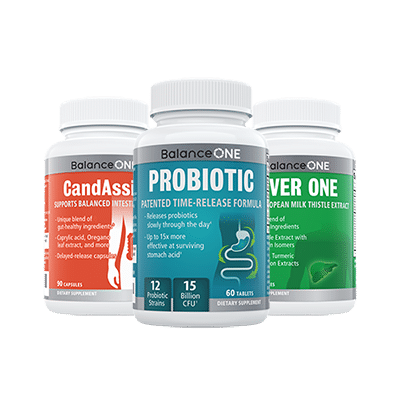
3-Month Candida Elimination Kit Start Your 3-month Candida Cleanse
This Candida Kit contains all the supplements recommended on the Candida Diet:
- LIVER ONE to process and remove the toxins created by Candida.
- CANDASSIST to inhibit and weaken the Candida colonies in your gut.
- PROBIOTIC to replace the Candida yeast with probiotic bacteria.
Plus... the CANDIDA DIET RECIPE BOOK with 50+ low-sugar recipes
Forgot to mention…. my probiotic was called OptiBac
Thanks Dana!
Has anyone else discovered supplements with ‘hidden ingredients’ that they want to share with our readers? Let us know!
I had read that…”some brands of Vitamin B are derived from yeast. Disodium guanylate can be derived from yeast…especially if it is listed as a vegan source.” I did find “Twin Lab” brand…do have B Complex without yeast. But also found out from Twin Lab that the B12 is fermented.
when baking with xylitol – can you replace it cup for cup with sugar in cake recipes for example? I see that is 50% less sweet and that’s okay with me, but adding 50% more product could change the consistency of the batter… so i’m just wondering if it’s recommended to replace it cup for cup?
To be honest I could have done with knowing this information right from the start. Maybe it should have been more prominent on the website, because I have spent a fortune on supplements which I probably can’t use now!
Just bought the book by Jeanne Marie Martin: Complete Candida Yeast Guidebook. Lots of information contradict what is found on the Candida website, for ex. : camomille tea Not to be used? Coconut milk Not to be used, stevia Not to be used! Is the book a bit dated with the info ? Does anyone know? Thank you.
Hi Louise! It looks like that book was first published in 1996 (and probably written well before that!). So the information it contains is likely to be 20 years old or more, and it disregards all of the research done on Candida and fungal infections since then. You’re absolutely right to be skeptical, and as always I encourage everyone to do lots of their own research before committing to a plan.
I have a product called ‘Digezyme’ that I took this morning. It has celluase in it. I also have a blood glucose monitoring system to check my levels and wondered why today it was up around the 7 when it never is! , now I know why. I’m normally around a 5… What a shame because it made me feel so good for a while! Does anyone know any decent digestive enzymes in Australia which are safe and don’t contain this ingredient?
Hello,
For those of you taking tinctures — or herbs preserved in alcohol — you can just add hot water to them like a tea. The hot water helps dissipate the alcohol.
Besides Candida, I was diagnosed with leaky gut and multiple food allergies. There’s been a real learning curve as far as learning to read labels. I just threw out my Trader Joes Stevia–it had milk in it, which I am now allergic to. I’d wake up in the morning and smell milk and I couldn’t understand why until I looked on the back of that container. I bought it before the diagnosis. Trader Joes does have pure Stevia–and it comes with a teeny spoon. It will last me forever.
i have been suffering from chronic yeast infections for years. been on fluconazole for years. been to many gynos and specialists. they now told me there is nothing they can do for me. keep taking the fluconazole. why am I taking it if it doesn’t help? they’re hoping my body will start responding to it again. now my skin has broken out in a yeast infection. constantly uncomfortable. cant have sex. think I already lost my mind. been trying holistic approaches. different supplements. better diet, yogurts, oi vey, so sick of them. any new suggestions? need help.
Hi Leslie,
Try the products profase biofase and florophage. They help by digesting bad bacteria and yeast and repopulating the gut with good bacteria. You need to cut out all sugar first. And boric acid 600 mg vaginally for 14 nights works really well too. Its a whole body approach not a quick fix.
You can buy borax acid in pill form
I seem to have yeast infections all year long, for years. can’t even drink a beer without a reaction. I just bought Candex and am going to give that a try. Will let you know what I find.
hi lisa, i’ve heard mixed things about glycerine/glycerin- as per the books encouragement i bought a non alcohol vanilla extract (frontier brand, organic) and have been using it a lot in smoothies and breads and stuff, to compliment the bitter taste of stevia when i use it. i just realized the vanilla has organic glycerine, which online i seem to be getting mixed messages about. i would really love your advice. i will cut it out if it is hindering my healing for sure, but i don’t want to if i don’t have to! does it feed the yeast? or is it more like a sugar alcohol? i read somewhere that your liver turns glycerin/e into glucose… candida eats glucose. help!!!
Hi Anna, glycerin doesn’t raise blood sugar levels in the way that other sugar substitutes do. That’s why its often used by diabetics. I think it should be OK, especially in the very small amounts that you will be using.
Please oh please, do tell me how alcohol–which breaks down into GLUCOSE at a similar rate to table sugar–doesn’t feed yeast. I feel like this cognitive dissonance is going to be HILARIOUS.
Thanks for the (misinformed and slightly unpleasant) comment HJ. Actually alcohol is more likely to lower your blood glucose that raise it. That’s because it promotes insulin secretion.
Of course, if you didn’t read the article fully and are talking about mixed alcoholic drinks (e.g. rum & coke), that’s a completely different matter. But that’s not what we are discussing here at all.
Lastly, please look up cognitive dissonance because you clearly don’t understand what it means!
I don’t think you are correct in stating alcohol promotes insulin release and therefore lowers blood sugar. I believe what it does do is block the liver from releasing stored glucose that is normally released in response to blood sugar levels going down. The liver slowly releases a little glucose every few minutes in the body because your pancreas is constantly release tiny amounts of insulin in response to the tiniest rises in blood sugar levels. It’s a constant cycle for both liver and pancreas.
Oh, I say this because I have been a juvenile diabetic for 43 years.
Hi Lisa,
I’ve been suffering from really bad adrenal fatigue and on a anti-candida diet for most of my adult life, but I’ve been working hard to recover from adrenal fatigue by taking supplements, resting, and researching everything I do to help the cortisol level return to a more normal range. Recently, I took a twice daily dose of licorice root extract solution without alcohol (glycyrrhiza spp in pure vegetable glycerin with water), and despite everything I can find online, I reacting to it like I’m growing yeast. I’ve been very sensitive to candida toxins to the point where I feel slightly numb, depressed, have hair loss and itchy scalp, develop a milky film on my contact lenses, and feel off whenever I get into a sugar-like substance as well as anything that will either grow candida or kill it. I’m not sure if any of the ingredients in this product will grow yeast or kill it, but I’d be so grateful to you for information as to why I’m not feeling a good response to a product that is supposed to be excellent for treatment of hypoadrenalism.
Consume 1/4 teaspoon (1/2 for males) of Borax in 1 quart of distilled water 4-5 days a week. Borax gives the adrenals a boost while simultaneously killing candida.
Dan, where’s the scientific reference to back up your claims regarding borax?
Kathryn,
When I had mild adrenal fatigue six weeks of licorice root pills (I believe it was a Metagenics product, although I’m not a fan of that brand anymore) and a thyroid support that contained adaptogen herbs did the trick. If you have trouble with supplementation to get a handle on your cortisol levels maybe try using essential oils to control stress response. High quality oils are important, the generic stuff is usually diluted. A brand like Doterre has potent oils. Roman chamomile is amazing for stress. How are you with herbal remedies? An adaptogen like holy basil can be very useful in managing your adrenals. Ashwagandha is also a typical one for the adrenals/thyroid. Good luck.
I have been taking MegaFlora by MegaFood for some time. I started taking it for excessive gas/indigestion and it worked right away! I was amazed! I was impressed with the blend of ingredients. The only ingredients listed under “other” are the capsule, L-Leucine, and Silica. Are those ok? I take the 20 billion CFU, but it also comes in stronger versions. You take 1 capsule a day, which, for me is better than another of the brands mentioned because it has to be taken 3X/day on an empty stomach and with my schedule I can’t do that. Note, it says to take it with a meal but you are supposed to take it on an empty stomach.
Boy, you are so right
I recently started getting yeast infections bad. I also just started taking probiotics and I couldn’t figure out why I was getting the yeast infection. This information was very helpful because it allows me to point on why I was getting them. My doctor prescribed me difluxcan. However the whole time I’ve been taking the difluxcin I’ve been taking the probiotics. Do you think I should call my doctor to get more medicine prescribed to me
I’ve come across some research indicating that Sprite or soda water is very effective at lowering acetaldehyde levels after consuming alcohol. Any idea if those beverages would help to neutralize acetaldehyde for those of us with candida overgrowth. My urine is like bubble bath 🙁 and I haven’t had any alcohol in years.