
7 Benefits of Probiotics For Candida
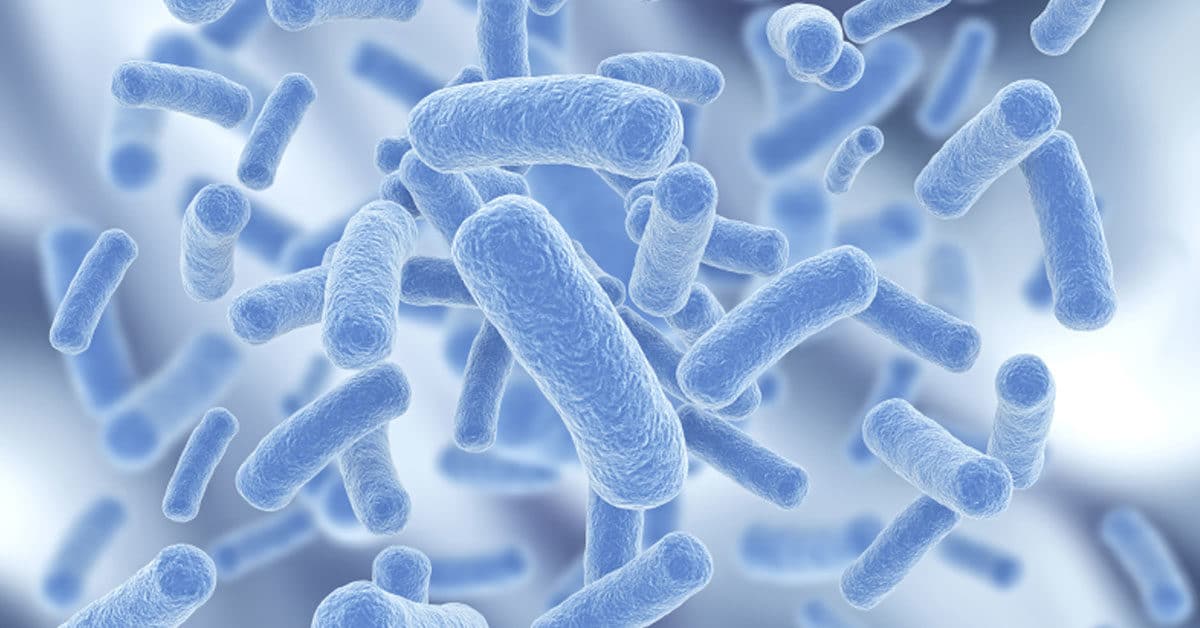
There are three indispensable parts of any Candida cleanse – a low sugar diet, natural antifungals, and some good probiotics. These deprive Candida albicans of the food it needs, prevent it from colonizing your gut, and restore a healthy balance of good bacteria.
If you get all three working together, you have a great chance of beating your Candida overgrowth. So why are probiotics so important, and what exactly is their role in beating Candida?
First of all, probiotics are a wonderful supplement to take whether you have a Candida overgrowth or not. They help with digestion, reduce inflammation, boost your immunity, and maintain a healthy balance of flora in your gut.
Whether you consume them in probiotic foods or in supplements, you should consider making probiotics a part of your daily routine.
There are 7 reasons why probiotics are particularly helpful for Candida sufferers. Choosing a good probiotic can make a big difference to your immunity and overall health. Let’s take a look at the benefits of probiotics for Candida.
Table Of Contents
#1: Probiotics Boost Your Immune System
Your immune system is a complicated mix of different organs and systems within your body. It’s so complicated in fact, that scientists are only just beginning to discover the way that these different parts interact to protect you from disease. One thing is for certain, however – your digestive tract (and the balance of bacteria within it) plays a hugely important role in the prevention of infection and disease.
Did you know that more than 70 percent of your immune system is in your gut? The cells lining your gut interact with both your innate and adaptive immune systems, which means that your gut is the first line of defense between your internal body systems and external pathogens. Any pathogenic microbes in your gut, like Candida albicans, must first get through several defense systems before reaching the bloodstream. (1)
Studies have shown that a healthy balance of bacteria in your gut will boost your immune system. They show that normal levels of gut bacteria increase the effectiveness of the immune system and help your body to fight off pathogens. Probiotics have been shown to offer protection from E coli., reduce the frequency and duration of respiratory infections, lower the risk of UTIs, and much more. (2, 3, 4, 5)
Taking probiotics can also prevent or treat infectious diarrhea caused by illness or bacteria. One major review of 35 different studies showed that certain strains of probiotics helped to reduce the duration of infectious diarrhea by around 25 hours. For this reason, probiotics are often recommended for those traveling in unsanitary areas or working in environments where pathogens are present, such as schools or hospitals.
More specifically for those suffering from Candida, probiotics have been shown to prevent Candida albicans from creating biofilms and forming colonies in the gut. (6)
By rebuilding your immune system with probiotics, you can improve your body’s natural defenses against Candida albicans. This is important not only to beat your Candida overgrowth, but also to prevent Candida and other infections from recurring in the future. That’s one reason why we recommend staying on probiotics even after your Candida treatment plan is successfully completed.
#2: Probiotics Regulate Your Gut Acidity
The acidity in your intestines should usually be between 4 and 6 on the pH scale, i.e. slightly acidic. Compare this to your typical blood pH, which should be between 7.35 and 7.45, i.e. slightly alkaline. The major reason for this acidity is not to break down food, but to protect from pathogens and food poisoning. This acidity is an indispensable part of your immune system.
Why is this particularly important for Candida? The Candida yeast is only able to switch to its pathogenic, fungal form in an alkaline environment. In fact, it even works to alkalize the environment around it so that it can complete this change. (7)
Returning your gut to a normal, healthy level of acidity helps to prevent fungal pathogens like Candida from spreading through your intestinal tract.
The good news is that many of the beneficial bacteria contained found in your intestines secrete small quantities of lactic acid and acetic acid. These help to maintain the correct levels of acidity in your gut. But repeated use of antibiotics or antacids can lead to your gut becoming insufficiently acidic, or even alkaline, and allow a Candida overgrowth to take hold. (8, 9)
A course of antibiotics can kill large numbers of the ‘good’ bacteria in your gut, many of which (like acidophilus) are acid-producing. However, a course of good probiotics will help to restore the correct acidity. This high level of acidity in your gut helps with digestion and is one of your best defenses against pathogens like Candida albicans.
#3: Probiotics Crowd Out The Candida Yeast
Much of your wellbeing comes down to the balance of good and bad bacteria in your gut. When your microbiome gets out of balance – i.e., there are more bad bacteria than good – we call this dysbiosis.
Dysbiosis can happen due to illness, certain health conditions, age, stress, genetics, or exogenous factors like antibiotics and poor diet. (10)
Supplementing with probiotic supplements or eating fermented foods has been shown to restore the harmonious balance of good and bad bacteria. One of the main benefits of probiotic supplements is to fill your gut with ‘good’ bacteria that crowd out pathogenic bacteria and Candida yeast.
A healthy gut contains colonies of hundreds of different types of probiotic bacteria. These bacteria use most of the space and resources in your gut, leaving very little for pathogenic bacteria and yeast.
When antibiotics or a low sugar diet cause an imbalance in your gut, they leave your intestines open for the faster-growing, opportunistic Candida yeast to take over. If you use probiotics to fill your gut with beneficial bacteria, this leaves less space and fewer resources for the Candida to grow.
This highlights the importance of taking probiotics regularly and in large doses while you fight your Candida infestation. The more that you can fill your intestines with healthy bacteria like Lactobacillus acidophilus and Bifidobacteria bifidum, the less chance the Candida yeast will have of taking over your gut.
#4: Probiotics Support Healthy Digestion
By helping your body to break down the food you eat, probiotic bacteria play an important role in healthy digestion.
They work using a unique process called fermentation. When food passes through the small intestine and into the colon, probiotics function alongside digestive enzymes in the intestine. Together, they help your body break down the food matter and absorb the nutrients within it. Without this help, digestion can be slowed or impaired. This can result in food passing through the body without providing you with the nutritional benefits that your body needs.
These bacteria also support the uptake of nutrients, electrolytes, water, and other beneficial substances from the intestines. This is vital for healthy digestion and normal functioning of the body.
An important feature of probiotics is their ability to reduce symptoms like gas, bloating and diarrhea. This is especially important when traveling or taking antibiotics. Several studies suggest probiotics are associated with a reduced risk of antibiotic-associated diarrhea, with one study showing that taking probiotics reduced the incidence of diarrhea by up to 42%. (11)
If you are suffering from Candida and an imbalanced gut, your nutritional absorption is likely impaired. This can lead to fatigue, weakened immunity, and a general feeling of low energy and mood. Adding probiotics to your routine will improve your ability to extract nutrients from food, and potentially reverse some of these symptoms.
#5: Probiotics Produce Valuable Nutrients
The fermentation process that probiotics use in the large intestine not only supports digestion, but also allows your body to create valuable enzymes and nutrients. (12)
These nutrients are essential for healthy function. The enzymes produced by fermentation help to break down foods (especially protein and fat), while the nutrients include B vitamins, vitamin K and short-chain fatty acids.
Without these nutrients, the body’s energy production would be somewhat compromised. It also needs these nutrients for tissue repair and maintenance, cognitive function, and hundreds of other processes.
#6: Probiotics Reduce Gut Inflammation
The lining of the gut is naturally permeable in order to allow nutrients (from the food you eat) into your bloodstream. The bacteria that reside on the walls of your gut act as a defense barrier, preventing any substances such as E. coli, chemical toxins and other invaders entering the bloodstream.
By maintaining and protecting the gut lining in this way, probiotic bacteria help to prevent the development of Leaky Gut Syndrome. This occurs when the gaps in the gut lining become too large, and allow harmful substances (like Candida metabolites) into the bloodstream.
Chronic inflammation in the gut, such as that which is caused by a Candida overgrowth, has been linked to a large number of inflammatory diseases. Probiotic bacteria help to downregulate inflammation, reduce the chance of inflammatory conditions, and improve overall health. (13)
#7: Probiotics Support Mental Health
At first glance, mental health might not seem to be connected to Candida. However, forms of gut dysbiosis like Candida are in fact closely related to low mood and depression. (14)
There is a rapidly growing body of research showing the gut microbiome plays an important role in your mental health. And the implications for treating depression and mood disorders are extremely important. Researchers have found that a direct line of communication exists between the brain and your enteric nervous system. This has been termed “the gut-brain axis”. (15)
This line of communication links the emotional and cognitive centers of the brain with your intestinal function.
Because gut bacteria interact closely with the nervous system, dysbiosis in the gut can severely affect the messages and chemicals associated with your body’s response to stress, anxiety, and even memory function. Supporting the health of your gut bacteria with probiotics has been shown to reduce depression, anxiety, and other mood disorders. (16, 17)
Here’s a great example. Animal studies on Lactobacillus plantarum have shown that it can increase dopamine and serotonin levels, while also decreasing depression-like behavior. (18)
In the future, we might see physicians prescribing probiotic supplements as treatments for depression. What would you rather take – a probiotic or an antidepressant?
How to Choose a Good Probiotic?
Choosing a good probiotic is not always easy. There are a number of factors to look for, and most probiotic supplements fail to pass at least one of those tests.
Make sure that your probiotic contains at least 10 billion CFUs of bacteria, and a number of well-researched probiotic strains. Avoid probiotics that contain ingredients like sweeteners or gums like might inflame your gut.
Most importantly, look for a probiotic supplement that has some kind of mechanism for getting its bacteria past your stomach acid and to your gut. Regular probiotics in vegetable capsules deliver a tiny fraction (around 4%) of their bacteria past stomach acid.
 We recommend the probiotic from Balance ONE. It has 15 billion CFUs of bacteria, 12 carefully chosen strains, and it uses BIO-tract technology to protect those bacteria from your stomach acid. It’s the only probiotic that we recommend for Candida and you can read more about it here.
Gut health is truly the foundation of good overall health. By supporting your gut with probiotics you can reduce inflammation, improve digestion, boost your immunity, and reverse or prevent a Candida overgrowth.
3-Month Candida Elimination Kit Start Your 3-month Candida Cleanse
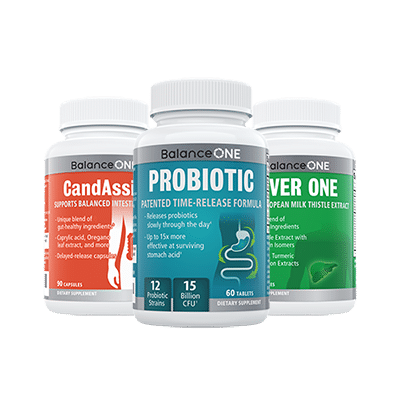
This Candida Kit contains all the supplements recommended on the Candida Diet:
- LIVER ONE to process and remove the toxins created by Candida.
- CANDASSIST to inhibit and weaken the Candida colonies in your gut.
- PROBIOTIC to replace the Candida yeast with probiotic bacteria.
Plus... the CANDIDA DIET RECIPE BOOK with 50+ low-sugar recipes

Leave a Reply