
Could An Alkaline Diet Make Your Candida Worse?

Many people these days are following alkaline diets to improve their health, but the fact is that they are not appropriate for everyone.
Certain parts of our bodies are naturally acidic and need to stay that way for us to maintain a healthy immune system.
Over-alkalizing your diet can upset the delicate balance that protects us from disease. In fact, if you are suffering from Candida then an excessively alkaline diet is almost certain to make your overgrowth worse.
The confusion often stems from the varying levels of acidity/alkalinity that each part of your body requires. For example, while your blood pH should be almost exactly 7.4 (slightly alkaline), your stomach and intestines need to be much more acidic.
This acidity helps to kill pathogens and prevent disease. And this same acidity is a part of your defense against Candida overgrowth.
Table Of Contents
Candida And pH
Candida albicans is an opportunistic microorganism that can survive in a wide range of pH levels, either acid or alkaline. In fact, it has two different forms that allow it to do just this – a yeast form and a fungal (or ‘hyphal’) form.
Almost all of us have the yeast form in our guts and it rarely causes a problem, but the fungal form is much more virulent and able to spread around your body. You are much more likely to experience the symptoms of a Candida overgrowth if you have a higher proportion of the fungal Candida.
How do we end up with either the yeast or the fungal Candida? A lot of it has to do with the environment in our small and large intestines.
The yeast form of Candida albicans survives most easily in an acidic environment, but when the environment becomes more alkaline, it is able to switch to its fungal form. Making your intestines more alkaline may have the consequence of encouraging more of the fungal Candida.
Take the example of a healthy person who eats a balanced diet and has not taken antibiotics recently. This person’s intestines will be slightly acidic overall, meaning that most of the Candida albicans in her intestines will be in the form of a relatively harmless yeast.
However, she then takes a course of full spectrum antibiotics. This changes the environment in her intestines by killing off the ‘good bacteria’ that live there.
Many of these bacteria produce acid as a metabolic byproduct, and they have names like acidophilus (‘acid-loving’ in Latin). Without these bacteria, the pH of her intestines quickly rises and becomes neutral or even alkaline. Now, the Candida yeast can morph into its fungal form, and the symptoms of a Candida overgrowth may rapidly appear.
What Can Change Your Intestinal pH?
So what affects the acidity in your gut? There are actually a number of factors, including your hormonal balance and the health of your gut flora, those ‘good bacteria’ that live in your intestines. However, the food that you eat is also an important factor.
Eating too many alkaline (or alkalizing) foods can increase the pH in your gut and lead to a Candida overgrowth. The most alkalizing foods tend to be fruits, which are also high in sugars and should be minimized on a Candida diet.
You should also know that the Candida itself is actively trying to make its environment more alkaline. One of the major byproducts of Candida’s metabolism is ammonia, a highly alkaline gas.
When the ammonia is released into your intestines, it gradually increases the pH. Usually this will be counter-balanced by the acid-producing bacteria in your gut, but if these bacteria have gone then that balance is lost.
The Candida yeast cells can only turn into their fungal form (and start to cause Candida symptoms) when the pH in your gut becomes neutral or slightly alkaline. Maintaining the natural acidity in your gut is an important part of preventing that from happening.
The alkaline supplements that many dieters use (baking soda for example) can quickly transform the pH of your gut and make it far too alkaline. The overall pH of your intestines is naturally acidic. You should try to keep it that way!
Restoring The Correct pH
There are some simple tips that you can follow to regulate the pH in your intestines and prevent a Candida overgrowth. Again, it comes back to the three central themes of our Candida treatment plan – diet, probiotics, and antifungals.
Diet
Minimizing fruit in your diet will not only prevent all that fructose from feeding a Candida overgrowth. It will also stop the alkalizing effect that fruit has on your intestines.
It is important to regularly consume probiotic foods such as plain yogurt, kimchi, and sauerkraut. These foods can improve stomach acid levels and re-populate the gut with friendly bacteria.
Probiotics
Probiotic bacteria like lactobacillus acidophilus secrete small amounts of lactic acid and acetic acid into your intestines. This acid is a great defense against pathogens and it prevents Candida from switching to its fungal form.
Antifungals
You may not have realized, but many antifungals are actually acidic. For example coconut oil contains three proven antifungals – caprylic acid, lauric acid and capric acid.
Combining these three elements is the best way to maintain the correct level of acidity in your intestines. In our Candida treatment plan we share comprehensive lists of foods to eat and foods to avoid, as well as lots of advice on when and how to take your probiotics and antifungals. I have also included more than 40 tasty recipes to follow during your Candida treatment.
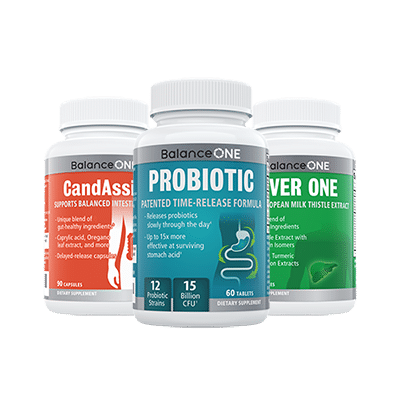
3-Month Candida Elimination Kit Start Your 3-month Candida Cleanse
This Candida Kit contains all the supplements recommended on the Candida Diet:
- LIVER ONE to process and remove the toxins created by Candida.
- CANDASSIST to inhibit and weaken the Candida colonies in your gut.
- PROBIOTIC to replace the Candida yeast with probiotic bacteria.
Plus... the CANDIDA DIET RECIPE BOOK with 50+ low-sugar recipes

Do you have any opinion about athletic greens? With winter coming I was considering adding that into a coconut milk-based smoothie daily to insure I get enough veg. The label reads as pretty low in carbs and sugars.
I have completed your program and feel better but I am also trying to fix thyroid and cholesterol. Family is uninterested in any dietary changes away from their beloved SAD, so I thought the greens addition might work well without my buying large amounts of stuff no one else will eat.
As far as I can tell, that seems absolutely fine. It does have some fruit powders and extracts in there, but that is more than balanced out by the probiotics and all the vegetable extracts.
Is Kamut ok on the candida diet?
Kamut contains gluten, so I wouldn’t recommend it.
do you have any science to back up the idea that an alkaline diet would promote candida? My understanding is that the body has systems in place to adjust when you consume more alkaline foods through the kidneys and lungs etc
thanks
J
The body will regulate your blood pH – that never really changes. But the intestinal pH can be greatly affected by the foods that you eat. This matters because we need an acidic environment in our intestines to protect us from pathogens. And as I mentioned, Candida Albicans is adept at changing its own environment to make it less acidic. This is a useful research study from 2011 – http://www.ncbi.nlm.nih.gov/pubmed/21586647.
Wow.. I always thought that our diet could change the blood pH. Thanks!
BEST REPLY ON THE INTERNET even in 2023 !!!! THANK YOU !!! I finally found someone who was able to explain this in a few sentences without contradicting themselves, or actual microbiology. I have HOPE !!
Science?!….Thats the problem… To many people rely on science way to much!
I began my Candida journey with the great information you provide on your website. It’s a great foundation for reclaiming health over Candida overgrowth and the damage it causes in our bodies. I didn’t have full control over the Candida until I began eating a diet that is meant to raise the pH of my body that was very acidic. I feel this is the aspect that Candida diets miss. It is possible to eat a diet that is simply geared for battling Candida overgrowth, but there is a risk that it will allow acid buildup and never truly win the battle. My body had been ravaged by fungus and my immune system was extremely weak until I started strictly eating foods that are alkaline, almost 90% of my diet. I am able to eat closer to 70% now.
Hi Jessica, thanks for your comment. You should know that there is no such thing as ‘body pH’. Our bodies have many different areas with different pH requirements. For example your blood pH is strictly regulated and never really changes (unless you are extremely ill). As for your intestines, they need a mild acidity to help protect you from disease. Most Candida sufferers actually need to increase the acidity in their intestines to help fight off the infestation. If you were eating a highly acidic diet previously, it’s possible that your symptoms were caused by another condition – were you actually diagnosed as having Candida?
Hi there I recommend having a look in to drinking kangen water. The machine turns your tap water in to 7 different PH levels of water and 4 of them recommended for drinking. You can control the PH and anyioxidants in your diet a lot better.
Believe it or not, I bought a Kangen water machine 2.5 weeks ago, and since drinking the water, I have started to notice an increasing amount of Candida symptoms, including a yeast infection and itching, which I’ve NEVER had or suffered from. The only thing I changed was my water, and I already eat super clean-no gluten dairy processed foods sugars etc., and I take supplements regularly including great probiotics. So it has me thinking only about the Kangan water……
Hi do you think it’s too much to be drinking lemon water and apple cider vinegar every day? Thanks
No I think it’s a great idea! They are both great for detoxing.
I started suddenly drinking lemon water everyday and I developed a yeast infection. I very rarely get yeast infections so I knew it was from the lemon water. I guess somehow it messed up my pH levels.
I believe that lemon/lime gives me also yeast infections as it is the only thing I added to my water, juices and smoothies and soon after I got the yeast infection back. I will avoid it for a while to see if I see a difference. I was taking lemon a lot and soon discovered an unbearable vaginal infection which developed for about 3 weeks, although I tried home remedies y still had to end up visiting the doctor to get the hard stuff ( chemicals) and was relieved from the pain and infection after a week. One month I was freed from yeast infection to get it all over again when I started drinking lemon water and mixing it up with juices and smoothies. I believe I’m just very sensitive for the acid.
So glad I came to this site. haven’t had a Yeast Infection in about 10 yrs, last 2 weeks was drinking lemon water and over the weekend the pain and itching started. I was freaking out until I decided to google… thanks so much for the information
I started drinking lemon water – two cups of water with half a lemon squeezed in – about two and a half weeks ago. I, too, developed a yeast infection just a few days ago. Usually I can combat these pretty fast, but this one is unrelenting. I also believe it’s from the lemon water. I haven’t changed anything else in my diet.
Hi , im glad im not alone , propobly lemon juice is very good for some people but if u have yest infection i dont think its good idea. whevever i add lemon juice even small amounts to my daily rutine i get yest infection and my other problems with candida geting worst , i note evrything i put in my monunth and lemon juice is definitly not good for me.
Hi everyone; regarding the lemon water, I have had the same experience with it. It actually made my fungus issues worse. After running to Google (which we all do lol ) I realize that lemon water is actually alkalizing in the stomach. I stopped drinking it and felt so much better. And to second what Lisa has said, when I switched to a more acidic candida diet, I feel sooo much better. I always thought that eating alkaline foods was better too. But I had to do two nasty antibiotics and I am certain that left my GI tract too alkaline and open to fungus growth. Thank you Lisa for all this wonderful information and for validating what I struggled for months to figure out on my own!
I just had the world’s worst yeast infection. The only thing I changed was starting to have lemon and apple cider vinegar in the morning, to try to be “healthy.” (I already eat the right diet.). Thank you for the comments; I didn’t know what was going on until now.
This is weird… I’ve found the exact opposite. I stopped putting lemon juice in my water and I started getting yeast infections again when I hadn’t been while I did the lemon water thing.
I’ve started again today cause Im suffering with an unbearable infection now and in literally hours, it cleared it up.
I’m guessing that this is due to the fact that I eat a very acidic diet otherwise and this helps balance it out and maybe you’re eating a good diet already and the extra alkalinity provided by the lemon juice (not a typo) is pushing you too far into alkaline.
This is interesting. Sometimes when I get a bit stressed, I get a bit of thrush in my mouth. I use a sort of mouthwash called Tooth Swish which consists of Himalayan Crystal salt, whole food calcium/magnesium, bicarb of soda & essential oil. I assume that would make the mouth alkaline? Would that be likely to encourage candida?
Hi Christine, don’t worry, that won’t encourage Candida.
Could drinking alkaline water have the same negative effect as eating
alkaline fruits?
My naturopath prescribed an anti-candida diet, probiotics, and anti-fungals for my eczema, but after three months, the rash started getting worse. Now, at seven months, it’s worse than when I started off on the
program.
After reading your article I’m wondering whether drinking the alkaline water from my microwater filter may be the problem as I drink at least
two quarts a day.
Drinking alkaline water is only a good thing if you are eating a highly acidic diet. If you are eating a balanced diet or following a Candida treatment plan, I would not recommend alkaline water.
Would that mean that eating a vegetarian/vegan diet promotes candida (fungal) growth and/or development?
If your diet contains lots of fruit, then it could certainly be a factor, yes.
Hi Lisa,
Thank you for your wonderful book so explicit in how to beat one’s candida. I have tried some of the recipes, but since I am intolerant to eggs ( in additin, to gluten, lactose and other stuff), I have replaced them with baking soda. I am starting to wonder if I am not helping the candida to grow in this way. If so, do you have suggestions for egg replacement. Chia will not work for me either.
Thank you!
Denise
Hi Denise, I’m glad you found my book helpful! Yogurt is often a good alternative to eggs, and you can try ground flaxseed mixed with a little water too.
Is there anything wrong with drinking distilled water on a candida diet? I have been fighting yeast infections for over a decade. In the last two years it has become worse in that I get a yeast infection nearly monthly. I was diagnosed via blood work with systemic candida. I have tried endless antifungals herbal and prescription. I take probiotics religiously. I have been on a strict anti candida diet for the past year thanks to your website information. Thank you for all that you do. I continue to struggle despite all these attempts to win this battle. Most recently I have gotten another yeast infection. After reading this article I wonder if baking soda that I took in water to assist with indigestion most recently may have made things worse. Also how much apple cider vinegar do you suggest taking per day?
Thanks so very much!
There’s nothing wrong with drinking distilled water. I would be careful about adding baking soda (for all the reasons mentioned in the above article). As for ACV, drinking 2 tablespoons a day with water is a great way to start!
Just want to leave a comment about ACV. I was taking it one table spoon for a week and the entire time I did not feel good. At the end of the week I felt dizzy, tired, and had crazy heart palpitations. I went to emergency and they said my potassium was low. On the internet I see so many recommendations for ACV and then one website said be careful with ACV since it can lower potassium absorption. I stopped the ACV immediately and now feel better.
Hi, I have not been able to lose weight despite all tests and medical knowledge, I have also been unwell since the birth of my 10 month old. I had a bad thrush outbreak, first ever, and went to naturopath. He did a blood screen and said the worst infection he had ever seen and gave me probiotics is this enough to fix me? I drink a lot of soda water too.
Hi Kelly, probiotics alone will not be enough. You need to make adjustments to your diet and take some good quality antifungals.
Hi Lisa,
First of all, thank you for all the wealth of info and advice! You have helped me on this candida fighting journey tremendously.
You mentioned lemon water and ACV everyday is great, however I was told by my naturopath that this could be imbalancing me and to stop. Is this possible? Would it be because of my slightly high blood sugar level or slight anemia? Or would you still recommend to this anybody?
Also, one thing I found that no matter what diet I did, stress is what really kept my candida thriving, and I think sometimes when we’re stressing out too much about our diets, we actually just make it worse. What are your thoughts on diet vs stress/adrenal exhaustion?
Thanks for your expert advice!
Cindy
I would like to see Lisa’s response to Cindy’s inquiry as I have a similar situation. Thank you.
I’ve always found ACV and lemon water to be great, I can’t think why they would affect your blood sugar.
As for stress, that’s listed by Lisa as one of the major causes of candida. It leads to higher blood sugar and a weakened immune system. I think the idea is to avoid over-exercising, reduce emotional stress and basically give your adrenals a break, then your body is better prepared to cope with the candida.
Dear Lisa, as everyone else I want to thank you so much for what you are doing and for your wonderful book. I love your diet and recipe book, it is the best one I have seen anywhere. However, the problem is that I have been following the diet and antifungals and probiotics as descibed in your book for around six months now and I am still struggling with Candida. From what I understood from your book is that after two months the situations should have been much better. I am a very serious case (systemic Candida) and have been struggling for around 4 years. It’s getting better but very slowly. Any advice? Thank you
Hi Filip, thanks for your kind words about my program and I’m glad to hear that you’re getting better! The length of treatment all depends on how serious the case of Candida is and how aggressive you are in treating it. 2 months is the best case and is certainly possible but, as I mention in the book, many Candida sufferers do need longer. Perhaps you should consider some stronger probiotics or try some different antifungals.
Thanks for all your really amazing information, it’s been great as I’ve had candida on and off for many years even though I fall into the ‘conscious, healthy eater’ category. What are your thoughts on kamut or spelt sourdough breads on a candidate maintenance plan? Thanks, Lainie
Thanks Lainie!! Unfortunately kamut and spelt are both wheat products so I wouldn’t recommend trying them until you’ve been on a Candida diet for some time.
I find this article hard to be true. If you talk to any doctor or naturalpath they will tell you that eating an alkaline diet is the best thing you can do for your health, being that bacteria/ fungus can not survive in an alkaline enviornent therefore it’ll be forced to die off. I drink lemon water everyday and sometimes with ACV and Baking Soda and I never have yeast infections and health is very good. If that was the case then we shouldnt take minerals (pottasium, magnesium, calcium) which PH are all 9 and up. Having a digestive tract thats too acidic is what causes candida.
Hi DD, it’s all about balance. There is a key difference between your overall body ph (which should be slightly alkaline) and your intestinal pH (which should be acidic). If you allow your intestinal pH to become alkaline, that’s bad for your digestion and can allow the Candida albicans to turn into its pathogenic fungal form. Please read through the article, and hopefully you’ll see the difference!
Are ringworm or toenail fungus related to candida? Could a candida diet also decrease a tendency to these fungi? Would molybdenum help?
Ringworm is a different fungus, but it can be caused by the same factors that lead to a Candida overgrowth – i.e. antibiotics, a high-sugar diet etc.
Hi Lisa,
Are adjustments appropriate for different blood types at some point in the treatment? Thanks for all you do.
Thanks Vikki! Some naturopaths believe that types A and AB have lower stomach acid and so would be more susceptible to a Candida overgrowth, as well as less able to digest meat. But personally, I think making the right diet and lifestyle choices are much more important, and blood type is less of a factor.
I believe I’m in the midst of “die-off” after treatment with natural anti-fungals, probiotics, & boric acid compound. Your infornation on this unpleasant dynamic is withouy parallel to me as I already have Liver Disease & the Ethanol & Acetaldehyde toxins are the same as from “booze” which are so damaging. All you have described I can relate to & comprehend – so much erroneous info from doctors & others who have the pH dynamic so wrong. Going to purchase your book tomorrow and please continue research & posts—am encouraged to journey on another path with this notorious yeast/fungus…..Many Thanks!
I haven’t bought your book because I can’t afford it right now. I have candida from years of antibiotics. I have interstitial cystitis and I have had it since the birth of my daughter in 2000. I have had every test under the sun so far I have been treated with various antibiotics. At one point I was told I have lyme, bartononella and protomyxzoa from the FRY test. I was treated with antibiotics for years off and on. No I can’t tolerate many foods at all. I’m on the candida diet and I’m feeling somewhat better. I have been on the diet since June of this year. I have my slip ups I sure can tell when I slip up. I’m so sick and I have to take benedryl for the allergic reaction from leaky gut syndrome. I’m getting some help from an energy specialist who does muscle testing and she says I’m loaded with yeast. She says interstitial cystitis is caused by yeast do you believe this is the case? I have been suffering for years please help. Doctors have made me more sick.
Shelley, for your interstitial cystitis, Boswellia is brilliant. I was diagnosed with that many years ago and when I have a flare up I get back on it. I use Mediherb Boswellia.
I’ve been trying to lose weight for a number of years. Every time I begin eating healthier, trying to eat more “alkaline”, cut out all sugars, gluten and acidic foods, I end up (after about 2 weeks) with a serious uti infection. This time my kidneys have also become infected even though I was on antibiotics. I’ve been told several different things; I need to get my urine more acidic to fight off these infections, that I need to continue with my alkaline diet, and that these infections are the symptoms of die-off. I don’t know what to believe or which advice to follow. This is the only time that I get uti’s. So far your info seems to make the most sense to me. Thanks in advance for your advice.
Hi Lisa-thanks you for all your wonderful info. I’ve read your book as well as some of the others. My healthfood store has recommended sauerkraut (made with ACV) for additional probiotic affects. I’m assuming it is acidic. What are your thoughts? My other question has to do with beans my primary source of protein-would 2 cups a day ( in a soup, hummus etc.) continue to feed the candida? Lastly, I’m assuming that I had a leaky gut because I had to and continue to take digestive enzymes ( 3 months) how long does it take for that to heal? Any words of wisdom are very appreciated!
Lisa,
I have RA. I have been told it is not a bad case. I am 55 and I feel like I am 90 years old. I am on a low dose methotrexate. I have steroid/lidocaine shots for low back pain. I have been on many other meds during my search for relief from pain. I am thinking part of my problem might be Candida. I score over 13 points when taking the test. Doctors I have seen are not responsive to thinking outside the box. Do you think trying the Candida diet would be effective with the drugs I am currently one. I am disparate for relief.
There is a direct link between Arthritis and gut health. I have PSA and have discovered a whole field of study on this link. If you heal your microbiome your joint inflammation will heal. I have found following the Candida diet, as well a taking the supplements L-glutamine and Boron along with probiotics to completely calm my flare ups. Another supplement to look into is Bromelain.
I am not sure were to start, but lets try here. I am 51 and have been fighting candida for 11 years. I notice when I have any sugar my joints hurt. Have been on a no sugar, bread, or fruit for quite sometime. On occasion I slip up. I have so real issues in my gut. I am also trying to loose weight. Was on Atkins for sometime and did ok for a while but the weight loss stopped. My son had went to a vegetarian diet so I tried it with him and felt very well and the weight started falling off. Just found out my blood type is A+ so that kinda makes since. Now my problem. All veggies, beans for protein and fruit are high in carbs. I am not sure if the probiotics and anti fungal meds will keep the candida at bay or will I need to eliminate beans and high carb foods till the candida is gone. I had a break out over the weekend from either sweet potato ( small amount) or strawberries). I just changed my probiotics today to one that is 60 billion. Any advice would be greatly appreciated. Elaine
Hey! If you’re looking for veggie protein without the carbs, try organic tofu! Carb-free! I know that some people avoid tofu and soy, but you might find that you tolerate it okay, as I do. I also find that I also can have beans in moderation, in a salad or such. Are you vegan, pr vegetarian? If you’re a vegetarian, you can also have eggs! Also, you’d be surprised, because a lot of veggies have protein (like broccoli!) Hemp seeds, quinoa, and other seeds (like flax) and coconut are also loaded with coconut and are all low carb! If worst comes to worst, use a sugar free, dairy free, clean protein powder.
@Elaine. I thought I had RA two years ago. Did a series of testing with no doagnosis. I contined to research my symptoms and discovered my gluten intollerance.
To all of you!
All you need to be healthy again is to be super strict with the diet and stay way from the doctors as much as you can!
Eat raw vegetables, super healthy fish(not poisoned from the dirty waters of the rives, and oceans), super rich with minerals water, eliminate the fake sugars, eat normal and very balance fruit combine all of them. Do not pass the limit of regular portion of the plate with protein and fruits and veggie!
No food made with flour, basically breads, cakes and cookies, and more and more stuff like these!
Eat white currant, red currant, figs, pomegranate, kiwi, green apples, and of course eat plenty berries all colors an special the black ones also eat for IODINE PERSIMON! They eliminate in the natural way the colonies in your guts and intestine with terrible fungal and non fungal of candida. After you finish the meal rinse the mouth(drink) at least one glass of water with half a lemon juice! Great for cleansing the whole your guts!
At night eat yogurt plan with little lemon and garlic fermented together for at least 20 days(put them together like 40 garlic head with full covered with lemon juice in the glass big wide bottle) Get one spoon a day with yogurt and also if you like and you are strong in your stomach just early in the morning as soon as you open your eyes. If you can! If you do not have any ulcer! But honest based in my experience fermented garlic with lemon juice for several days in the fridge, never created any pain in my stomach. raw garlic create discomfort for some few minutes and goes way fast. But I recommend fermented for 25 days in the dark room of the fridge.
If you ever feel discomfort after the meal, try to mix one third of tea spoon of baking soda with the one tea spoon of organic apple cider vinegar and mix them with the glass of water. DRINK IT! IT IS GREAT and will help the pain created as wrong food in your stomach or in your intestine.(: SAD but do not ever forget that all the old traditions methods are better than all these crazy antibiotics given to all of us from these LAZY PATHETICKS DOCTORS! Trust your mamas and grandma way of living with few stuff and no doctors in their life!
Do not ever forget as a result of the chronic infections with all these crazy microorganism all glands are tired and special thyroids glands do not produce a lot and probably no more the IODINE IZOTOPE 131, which helps to fight any infections in our system, and of course to prevent any disease that will create the cancer which has the power to get over and kill any part of our body.
Change immediately life style! Eliminate the stupid stress! Be like a little child in your soul! GO SWIMMING! DRESS COMPHY! BE HAPPY BY NOT LETING ANYONE TO DAMAGED YOUR LIFE! Take vacations in primitive places, where is not much development, like in Greek villages! (:
PLEASE BE DOCTOR TO YOUR SELF like in the old times! STAY WAY FROM ALL DOCTORS! sincerely,Miranda
Thank you so much Miranda! God Bless you!
Lemon and garlic. I will try this. Thank you Miranda!
Very Nice Miranda ,what-if in have a stomach ulcers , what can I feed?
Hi miranda would you say farmed fish or wild caught were better?
Hi,
My former doctor told me I had IBS. My new doctor saw right away I had a bad case of thrush. I was treated with nystatin and I changed my diet to continue
treat the thrush. My skin condition, thrush and other problems have cleared up for the most part. But about 3 months later, I find out that I also have had a bacterial infection raging in me. I had to take antibiotics for that. Now I am taking a candida enzyme now along with everything else to break up any biofilm and resistance that probably has occurred due to the antibiotics. The downside is the weight I have lost. I was not really overweight to begin with. No matter how much I eat I cannot gain anything. Any thoughts? Thank you.
Hi Rose-Ann, this post should help! https://www.thecandidadiet.com/candida-weight-loss.htm
Hi Lisa,
I’ve been to a pcp, gynecologist and dermatologist. I’ve even been referred to a incontinent specialist because my symptoms happen most when the urge to urinate happens/or after urination. I have been suffering from symptoms of Candida for YEARS! I just came across an ahah moment by seeing some of the candida tests – this was about two weeks ago. I have anemia – low iron and b12, but recent blood tests show that I’ve improved it with supplements and eventually with iron rich foods, but I still have the fatigue and the worse case of yeast infections so far, plus hair loss, joint pain and the most worrying – the brain fog some have talked about. I have to admit to some speculation of previous diagnoses of yeast infections, because diflucan never worked and I didn’t have the cottage cheese everyone always says was there. (sorry for graphics) I did an avc wash, diflucan pill and now starting doing alkaline diet (for two days), with eating yogurt, cinnamon, ginger and turmeric. Symptoms have greatly improved sense doing the wash (was afraid to drink avc) and can even see the die-off part is coming to a close (crossed fingers). I am still figuring out what diet would help the best – your alkaline might be hurting it article has been very helpful. One of the most confusing things for me has been the diet piece, I also seem to have a sensitivity to citric acid – I get horrible cysts under my arms when I eat citrus and use vinegar. could the cysts also be a reaction to the candida, with the citric making my body more alkaline? I’ve always thought that citric acids make you more acid, but in looking in the alkaline diets – which use a lot of lemon/lime to make you alkaline, it would kind of makes sense. Now that I have more information I plan to go to my trio of doctors for better help, but want to start whatever I can for relief as soon as possible. Thanks for reading my very long post.
Also something that has been confusing is that a lot of websites I’ve come across have said the alkaline or candida diet, but a lot of them don’t say the same things. Distinguishing between what each diet wants/needs to do has been helpful in looking through your website.
Hi!
I’m a nursing mother who has developed thrush and unfortunately passed it along to my baby. I shouldn’t completely eliminate fruit but was wondering if there is a safe dosage and/or any specific fruits to completely eliminate? Also, why should one avoid drinking milk? wouldn’t that be harmless as well as hard cheese?
Thanks!
Hi there, very interesting site – I was wondering how it could still be beneficial to drink apple cider vinegar and lemon juice in water if they are both alkalising – doesn’t that mean they are candida-friendly or have I misunderstood? Thanks!
Hi Karen, there is a difference between alkalizing the body tissues and alkalizing the gut.
Yes, Karen, that is my same point of confusion. I have the “Prescription for Nutritional Healing Index” which recommends diet changes and supplements for different ailments. It warned against ingesting lemon/lemon water while fighting a candida overgrowth because it is alkalizing.
Lisa, I see you mentioned a difference between alkalizing the body versus the gut. Do ACV/lemon NOT alkalize the gut? This is my only confusion with the Candida diet. Also, leafy greens are alkalizing…but it seems impossible to imagine that would make these vegetables a BAD idea for those with CA infestations. Any clarification you can provide, Lisa? Thanks!
What do you think about Seltzer water and lemon?
I am getting a bit of gas from it while on a Candida diet but I was silly enough to eat pickles thinking it would be okay.. Just learned that pickles make it worse
Just wondering about Seltzer water?
If my pH water is alkaline, can I still add ACV to my alkaline water?
Hi I have suffered candida about three times the last break out was very bad and lasted about a month and I was very careful what I ate through research because it just wasn’t worth the suffering. I tried acv with lemon and found no significant difference on my last outbreak but what I have noticed on this forum of sufferers is that not one of you has mentioned the importance of eating organic food. If your eating food riddled with chemicals it’s not going to help your bodies natural healing process its toxic. What worked for me was a pinch of bicarbonate of soda in water once a day, no wheat , no carbs and no sugar and by no sugar I mean no sucrose ie foods containing cane or brown sugar, no sweeteners at all and the one that may surprise you is no fructose ie no sweet fruit until your healed, that’s right healed it is possible. The reason for no carbs is because I read somewhere the body breaks this down into sugar which candida loves. I also took baths with bicarbonate of soda (great for drawing out the toxins in the body and if it’s true that candida is a yeast infection what kills yeast in cooking?bicarbonate of soda!) and tea tree oil. Tea tree oils a great anti fungal anti bacterial anti microbial. I have suffered so bad I have even had diluted tea tree oil on a tampon. Stings to start with (die off is painful) but again the reduction you notice in symptoms over the course of the next 3 days is phenomenal. I would also strongly urge you to stop taking antibiotics because this kills the good bacteria which you need to fight the candida . Antibiotics made things instantly and extremely worse for me. I have never been back to the doctors since. What they tend to give is temporary solutions which create or worsen problems. Please note the medical industry is there for money making it has no interest in cures. Stay natural and holistic, ie no processed foods. Eat fresh vegetables and salads, quinoa and amaranth are great grains that do not have an adverse effect in my experience. Nature really is your best friend.
I think I developed an yeast infection after using baking soda to wash my private area. Could the baking soda cause me to develop an yeast infection? ?
Yes because it would dramatically raise the pH in the local environment.
You might have a point here. I was on a strict alkaline, vegan, all natural foods diet for a month (my normal diet wasn’t bad to begin with). As I transitioned off of the diet slowly but the day after I reintroduced sugar back into my system I started intense itching all over my body. The itching led into skin fungus on different parts of my body. The fungus would leave one area and go to another. Once I realized it was a yeast overgrowth problem I began to treat it with anti-fungal herbs, probiotics and anti-candida enzymes (week 1-2 of the alkaline diet I began to crave sugar and bread strongly). I am also continuing the diet without the fruit sugars or agave (which was the only sugar allowed). I am finally beginning to feel better.
I was introduced to Kamut on the diet and fell in love with it. I came her to see if Kamut was ok for a candida diet. It is a wheat but it is low-gluten and very tolerable to people with gluten sensitivities. I would put Spelt and Kamut on the maybe list if I were you.
Also, I have continued to avoid all dairy products. I made my own yogurt with coconut cream and probiotics and it was delicious. I also used it to successfully treat the beginning of a vaginal yeast infection that began to come on since Ive been dealing with this. Awesome.
I purchased your book. Thanks for all of this information. Coconut milk and oil have become my best friends. I will purchase some coconut flour and buckwheat flours today and use some stevia to make some muffins. I really miss my pastries. Whats a good substitute for coffee???
Hi Frassy, thanks for posting! I’m glad to hear things are going well. We didn’t include spelt and kamut on the maybe list because there are plenty of other gluten-free options to try. However, you’re right in that both spelt and kamut are definitely less troublesome than other grains. If they work for you, that’s great 🙂
I hope you enjoy the muffins. Post them on your website for us if you can!
Are women affected more by Candida Overgrowth in the stomach than men? It seems that this site is dominated by women – but I am a 74 year old man, desperately starting a diet in the hope it may help. I don’t have the skin infections that women get, but I have had a white coated tongue for three years and everything points to Candida Overgrowth. ….I notice that some people here take Yogurt, but I read elsewhere that Yogurt is loaded with sugar, which assists the Candida to get worse. As from a fortnight ago, I have cut out all chocolate, cakes, buns and ice cream from my diet. Everything that has sugar has been stopped. I am taking Probiotics, Vitimin D3, Magnesium supplement, etc. The worst thing is the BRAIN FOG. I have read that internal Candida can get into the brain and encourage the beginnings of Alzheimers, so it is quite worrying. I THINK the steps I have taken (above) are quite good. My weight has gone down about four pounds already and I feel slightly better, so am I on the right track?
I have to avoid eating nuts, coconut milk, and coconut meat. Do you have a list of anti-candida recipes that do not require using any nut flours, coconut flour, or coconut milk?
Hi Glenna, I’m afraid we don’t have a list that meets those specific requirements. But the recipes section, and the two recipe ebooks, do contain plenty that would meet your needs.
I felt to leave a comment here for anyone going through this. It has been over a year now that I have fought Candida. I had one of the worst cases, my ears were so full of candida I had lost part of my hearing, my organs were infested, I had a solid white tongue and the battle was fierce. I detoxed for over a year and one of the things I put off – that I wish I did at first now – that helped beyond what I could imagine is drinking bone broth for dinner and nothing else. Doing this I immediately felt a huge weight lift off of me, by the third day it was like I felt so amazing, it was like I was 20 again!!
I am now in my last week of detox and moving into more of the heal my gut stage. But taking one last week on antifungals and drinking bone broth at night, just to make sure its low enough to fight off with just probiotics and all the fermented foods.
I haven’t eaten sugar, a carb, fruit or anything that turns to sugar in over a year. Now I do liver detox, drink fiber and just do leafy greens and clean protein. I look forward to my complete restored health and honestly I feel so absolutely amazing now that I may never eat sugar again.
If you are reading this and suffering, know that even if you are as bad off as I was there is light at the end of the tunnel. I also used topical antifungal cream in my ears (which I would ask your doctor about but I was extremely desperate) and it gave me my hearing back. Its all gone out of my ears. Also food grade hydrogen peroxide for a bit, that helped with thrush.
Where there is a will there is a way to restored health
Does anyone know why heartburn would be occurring more about 30 days into a candida diet?
Thanks!
Hello, I find your info very interesting, thank you.
There is so much out there it can get mind boggling.
I’d like to mention that acidophilus probiotics are not good for me as after a very extensive bioscreen stool sample test (gut DNA test) it showed I have high candida and streptococcus along with others like e.coli that are high and low bacteria readings to which the acidophilus makes the candida worse because of the already high lacid acid build up.
The gut is very complex and so are each of us different as humans.
I found a very good functional medicine doctor I’ve been working with for years now.
Most recently uncovering that I have high mycotoxins in my body from mould exposure causing my many years of chronic illness and fatigue.
Definitely agree a good balance of everything is key to a healthy lifestyle, especially managing stress.
Hi there, glad to have found this. I have chronic illness and attempt to manage symptoms with a restrictive diet. Trying to go off this diet, even mildly, invariably puts me back to stage one and can take weeks/months to improve again. Well, I was improving and then a friend offered me a lemon/lime herbal tea. I was hesitant, as I can’t have fruit, but gave in. From this alone, I crashed and have been very ill again with candida. I couldn’t believe it! I knew it couldn’t be simply due to fruit sugar, but now I recognise the alkaline effect. One drink and I was finished. That’s how suseptible I am. Never again! (I hope I never chance it again). I am stuck consuming nothing but meat and low carb veg and healthy fats. Trying to consume any grain (even gluten free), fruit, or any high carb veges is a disaster. Very hard to live this way, but it’s the only way I can.