All About Butter
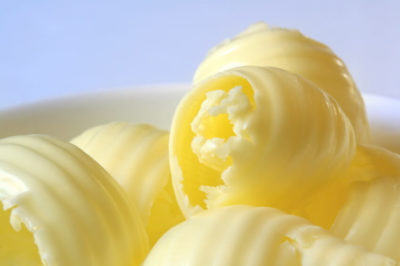
Butter is a byproduct of milk which is made by churning milk or cream. It’s mostly made from cow’s milk though milk from goat, buffalo, and sheep may also be used. Salt, coloring, flavoring, and preservatives may be added before the butter is packed. You can eat butter on the Candida diet, along with some other dairy products. You can read more about the Candida diet here.
Production
Depending on the diet of the cow, the color of the butter will vary. Grass-fed cows produce butter with yellowish shade while cows fed with grains and other food items produce butter that which is white in color. The first step in making butter is to separate the cream from the milk. The separated cream is then tested for ph value, butterfat content, flavor, and other defects. This cream may be pasteurized to ensure all bacteria have been removed. The next step is aging where the cream is stored in cool temperatures to crystallize the butterfat to help churning. This cream is then placed in a mechanical churn which when operated turns the cream around, separating the butter and buttermilk. The buttermilk is then drained and the butter is washed if required. Salt and other flavors can be added before the butter is sent for packing.
- Key Steps in Butter Production: The key steps by which milk is turned into butter.
- Monthly Production: Provides information on total monthly production of butter in the United States from 1981 onwards.
- Butter Manufacture: Covers the different aspects of butter production including an overview, butter structure, yield calculations, and more.
- Making Butter: Concise description of how to make butter at home.
Vitamins
Butter is a rich source of vitamins. It’s especially a great source of vitamin A which helps improve vision and other functions of the body. Butter also has other fat soluble vitamins like vitamin D, E and K.
- Vitamins & Minerals: Provides information on the vitamin content of butter.
- Butter Information: An overview of butter with some information on the vitamins.
- Vitamin D in Butter: A study on the content of Vitamin D in butter.
- Vitamin K2 The Missing Nutrient: Explains the importance of Vitamin K2, one of the vitamins found in butter.
- Vitamin A of Butter: Scientific paper into the characteristics of Vitamin A in butter.
- Vitamin E: Offers information on Vitamin E which is one of the vitamins found in butter.
Health Benefits
It’s a misconception that butter is unhealthy due to its fatty nature. At a basic level, butter contains selenium, a mineral rich in antioxidant properties. It also contains iodine required by the body. The butyric acid present in butter acts as an anti-carcinogen while lauric acid has antifungal and antibacterial properties. All these are components of the fatty acids in butter. Glycospingolipids protect against gastrointestinal infections so it’s better to avoid low fat butter for children.
Butter is on our list of foods to eat because it is naturally low in carbohydrates, and a healthy source of fat.
- Real Butter: Explains why real butter is important for your health.
- Saturated Fats: Discusses the health benefits of saturated fats which include butter.
Butter vs. Margarine
Margarine is used as a substitute to butter because some people can’t accept the fact that butter has high cholesterol. Margarine is made up of various vegetable oils by bubbling hydrogen through the oils at high temperature. Though it is low on cholesterol, it’s considered a chemically extracted product so it’s not completely healthy. The high temperature destroys the vitamins and other nutrients present in the oil which also contain Trans fatty acids with residues of nickel and cadmium. These acids are carcinogenic and mutagenic. Butter that is raw and cultured is the best type to buy. Another option is to buy organic butter as it contains the least chemicals. Margarine may be cost effective but nutritionally, butter is a better option.
- Butter & Margarine: A look at the advantages/disadvantages of butter and margarine.
- Butter or Margarine: Discusses the benefits of margarine and butter.
- Butter vs. Margarine: Read this article to find out who’s the winner in this long debate.
- Which is Better?: Enters the debate from the viewpoint of heart and vascular health.
- Butter Versus Margarine: Provides some information into the benefits of butter and margarine.
- Butter or Margarine?: An article which helps to answer this fascinating question.
- Why Butter is Better: An analysis why butter is better than margarine from the Weston A. Price Foundation.